
PeerSearch.ai Blog
The 6 best talent intelligence platforms for 2026.
October 2026 · 10 min read
Talent intelligence is the layer above an ATS and a sourcing tool. It is where the data those tools generate gets turned into decisions: where the talent your company needs actually sits, what skills your top performers share, and what your competitors are doing with their teams.
The category is messy. Half the products marketed under the label are internal workforce planning tools that map existing employees to open roles. Others are built to find and engage net-new talent from the open market. Confusing the two means a six-figure contract for software the team never uses.
We compared 6 of the leading talent intelligence platforms in 2026. For each one, you get what it actually surfaces, where it falls short, and the kind of recruiting function it fits.
All 6 platforms at a glance
| Platform | Primary use case | Pricing |
|---|---|---|
| 1. Eightfold | Skills intelligence + workforce planning | Quote-based |
| 2. SeekOut | Workforce analytics + specialized sourcing | From $149/month (annual, 3 seats) |
| 3. Metaview | Interview intelligence + AI sourcing | Free with a work email; Pro $100/user/month, Max $300/user/month |
| 4. LinkedIn Talent Insights | Labor market benchmarking | ~$20K–$60K/year |
| 5. PeerSearch.ai | Executive talent mapping + AI shortlisting | Free demo (5 searches); Scout $69/month; Pro $199/month |
| 6. Phenom | High-volume enterprise TA | ~$10K/month+ |
1. Eightfold
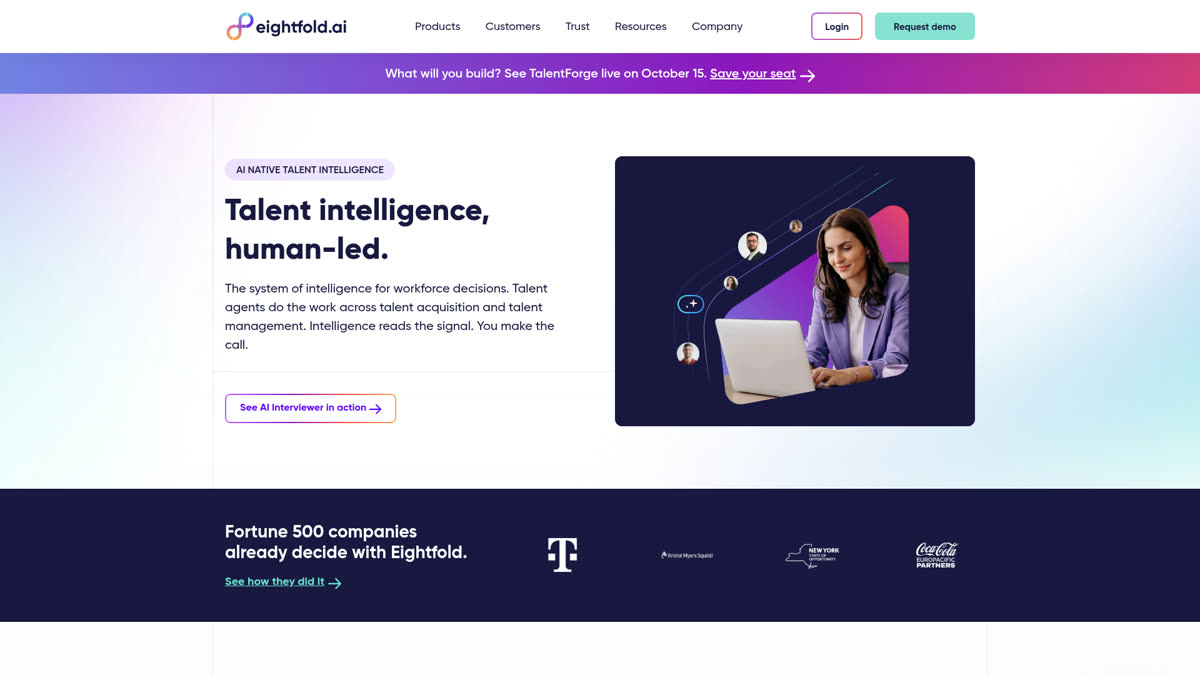
Eightfold: skills intelligence + workforce planning. Source: eightfold.ai.
Best for: Fortune 500 talent management at scale.
Eightfold is the enterprise AI talent intelligence platform. One AI layer runs across recruiting, internal mobility, workforce planning, and skills development on a single data model.
For large organizations that want intelligence spanning the full talent lifecycle — not just sourcing — it remains the reference implementation.
What you get:
- AI talent intelligence across hiring and internal mobility
- Skills-based candidate matching and sourcing
- Career-site personalization and candidate experience tools
- Workforce-planning and reskilling analytics
Where it falls short: Enterprise-only pricing and implementation complexity. Best suited to organizations with 5,000+ employees and a dedicated HR technology team.
Our pick: Fortune 500 talent functions where AI needs to run across recruiting plus the broader talent lifecycle.
2. SeekOut
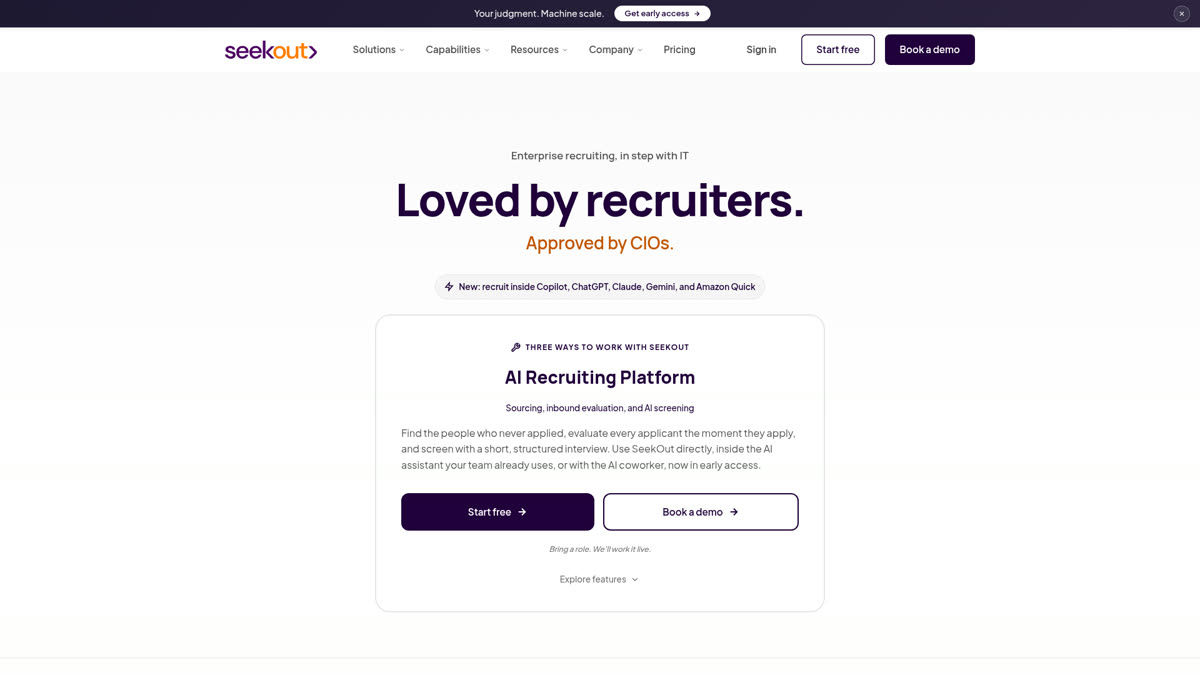
SeekOut: workforce analytics + specialized sourcing. Source: seekout.com.
Best for: Cleared, diverse, and deep technical talent intelligence.
SeekOut is the enterprise talent intelligence platform with unusually deep specialized filters: over a billion profiles, millions of security-cleared profiles, and rich diversity and veteran data.
Its market insights help talent teams plan where to hire before a search opens.
What you get:
- Full-graph sourcing with specialized filters (clearance, diversity, technical skills)
- Talent market insights for hiring planning
- ATS rediscovery on Greenhouse, Lever, and Workday
- 14-day trial available
Where it falls short: No perpetual free tier. Market intelligence is reserved for the two highest, custom-priced plans, and the entry plan starts at $149/month paid annually upfront for three seats.
Our pick: Defense-adjacent, cleared-civilian, and specialized technical talent functions.
3. Metaview
Metaview: interview intelligence + ai sourcing. Source: metaview.ai.
Best for: Recruiting teams who want intelligence tied to the interview layer.
Metaview's signal comes from inside the interview itself. The platform captures every interview, structures answers against your rubric, and surfaces patterns across hires.
Reports turn that data into team-wide intelligence: who scored consistently, which interviewer is drifting, and which competencies separate top performers from average ones.
What you get:
- Live capture across Zoom, Google Meet, Microsoft Teams, and phone
- Structured candidate reports mapped to your interview rubric
- AI sourcing layer to find off-list candidates by description
- Scorecard write-back to Greenhouse, Ashby, Lever, and 60+ other systems
Where it falls short: The intelligence layer is strongest once candidates are already in your interview process — it does not map an external market before a search opens.
Our pick: Recruiting teams that want talent intelligence tied to what actually happens in interviews.
4. LinkedIn Talent Insights
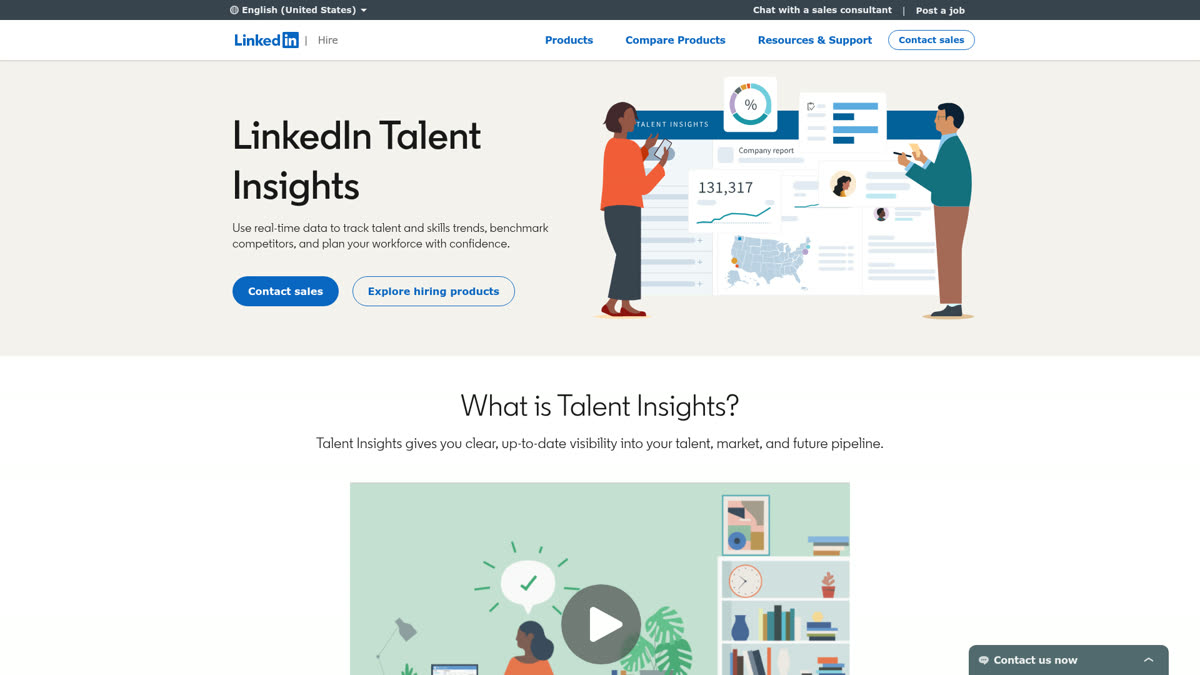
LinkedIn Talent Insights: labor market benchmarking. Source: business.linkedin.com/talent-solutions/talent-insights.
Best for: Labor market benchmarking and workforce planning.
LinkedIn Talent Insights draws from more than a billion members to surface talent pool size, hiring velocity, and how competitors staff by region.
It is a market data product, not a sourcing tool: plan where to expand, benchmark salaries, and ask where the talent for a role sits before a search opens.
What you get:
- Talent pool and hiring-trend reports by role, skill, and geography
- Competitor workforce benchmarking
- Compensation and supply-and-demand data
- Pairs with LinkedIn Recruiter (licensed separately)
Where it falls short: Roughly $20,000–$60,000 per year with no self-serve option or free tier. Data lags real time by weeks, and it does not identify candidates open to opportunities.
Our pick: TA leaders making strategic decisions about markets, locations, and offer bands.
5. PeerSearch.ai
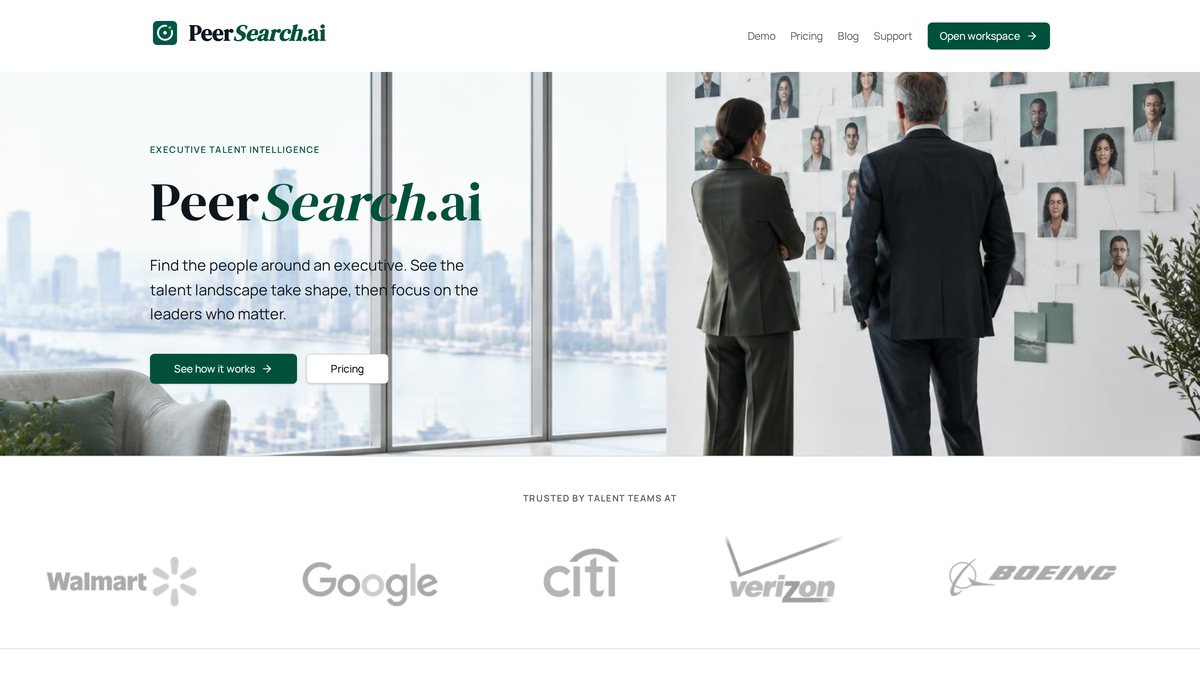
PeerSearch.ai: executive talent mapping + ai shortlisting. Source: peersearch.ai.
Best for: Executive search and talent mapping around a known leader.
PeerSearch.ai takes a different starting point from every other platform on this list: one executive. Paste a leader's profile link and the platform maps the talent around them — current employer, title, and picture first, then up to 200 relevant professionals streaming in live.
An executive summary is written as results arrive, and every phrase in it is clickable to produce a close shortlist. A prompt bar narrows the mapped talent with natural language, and results can be organized into projects, exported to Excel, or delivered as a PDF executive report.
What you get:
- Talent mapping of up to 200 names from a single executive profile
- Live progress with an AI-written executive summary and clickable shortlists
- Prompt-based shortlisting across current and past searches
- Projects, search history, Excel export, and PDF executive reports
Where it falls short: Purpose-built for executive-level mapping rather than high-volume req filling. No ATS or interview tooling — it pairs with those systems rather than replacing them.
Our pick: Executive recruiters and talent teams who start from a known leader and need the surrounding market mapped in minutes.
6. Phenom
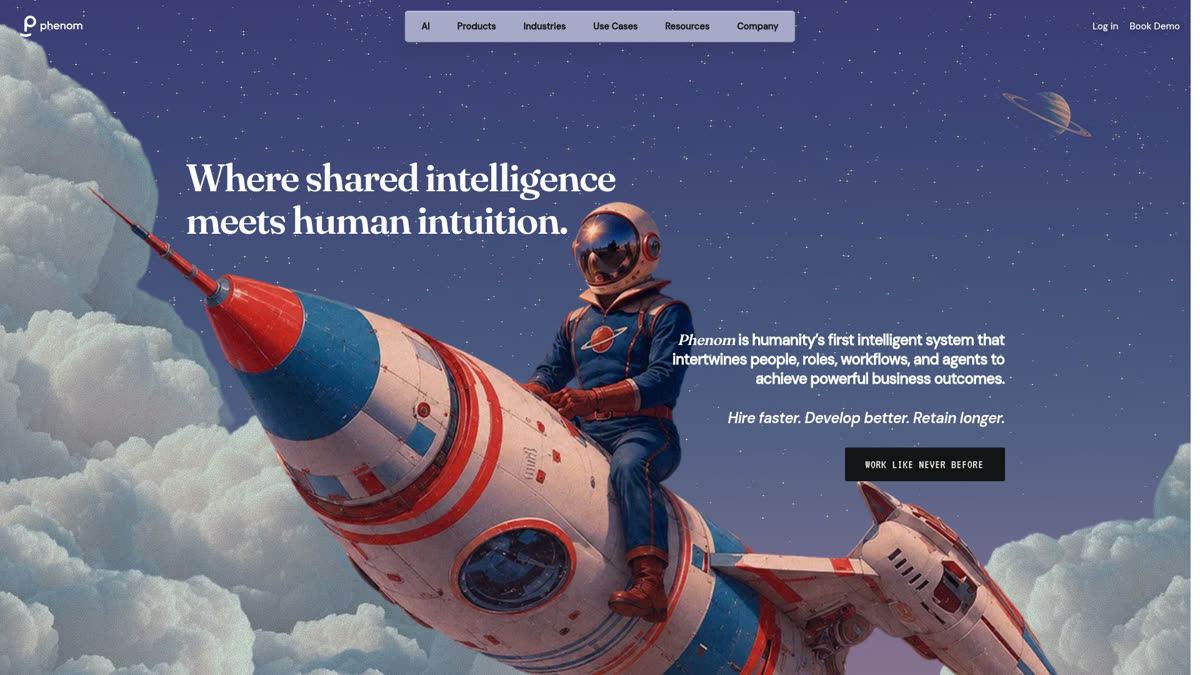
Phenom: high-volume enterprise ta. Source: phenom.com.
Best for: High-volume enterprise talent acquisition.
Phenom serves hundreds of global brands with a unified candidate, employee, and recruiter experience layer, and a data graph spanning a billion-plus profiles across 180 countries.
Its agentic AI layer has processed tens of millions of interactions, and recent acquisitions signal a heavy bet on agentic workflows.
What you get:
- Unified candidate, employee, and recruiter experience
- Agentic AI across career sites, chatbots, and CRM
- Deep SAP SuccessFactors and Workday integration
- Skills ontology spanning tens of millions of skills
Where it falls short: Starting around $10,000 per month with custom enterprise quotes. The sourcing layer is conversational and inbound-first, not the deep search outbound recruiters typically need.
Our pick: Enterprise TA teams hiring at scale who are already running SAP SuccessFactors or Workday.
How to choose the right platform
Pick the tool that matches the job your team actually does. Enterprise skills intelligence points to Eightfold. Cleared and specialized technical sourcing points to SeekOut. Market benchmarking points to LinkedIn Talent Insights. High-volume enterprise TA points to Phenom.
If your work starts from a known executive — mapping the talent around a leader, building a shortlist, and delivering a report a client can act on — that is the job PeerSearch.ai was built for. One profile link in, a mapped market of up to 200 names out, with an executive summary and prompt-based shortlisting on top.
Three sanity checks before signing anything: measure time-to-value in days, not quarters; price the three-year total cost, including renewal escalators; and confirm the data refreshes continuously. A stale snapshot is not intelligence.
Frequently asked
What is a talent intelligence platform?
A talent intelligence platform aggregates candidate, employee, and labor market data, then applies AI to match people to roles, map markets, and identify capability gaps. It sits above the ATS and sourcing tools, turning the data those systems generate into decisions.
How is talent intelligence different from an ATS?
An ATS tracks candidates through the hiring pipeline once they are in your system. Talent intelligence finds, maps, and qualifies talent before it enters the pipeline. Most teams need both: intelligence to build the top of funnel, and an ATS to manage it.
Which platform is best for executive search?
Executive search starts from a known leader, not a keyword. PeerSearch.ai is built for exactly that: paste one executive's profile and the platform maps up to 200 relevant professionals around them, writes an executive summary, and lets you shortlist with natural-language prompts.
Do smaller recruiting teams need a talent intelligence platform?
Most enterprise platforms are overkill for teams under 200 employees. Smaller teams get more value from focused tools: executive talent mapping (PeerSearch.ai) or interview intelligence (Metaview). The enterprise layer becomes worth it when workforce planning spans regions or thousands of employees.
What should I check before signing an enterprise contract?
Three things: time-to-value measured in days rather than quarters, three-year total cost including renewal escalators and add-on modules, and data freshness — any system with talent data older than 90 days is selling a snapshot, not intelligence.